What lumens in floodlights and LED bulbs actually mean
Read Now
Home Security Tips
Share:
Key takeaways
Lumens measure the output of visible light from a bulb, or a fixture with built-in lighting, like a floodlight camera.
The more lumens a device has, the more light it emits.
In the age of LED lighting, lumens replaced watts (which measure power) as the standard way to measure light output.
Choose fixtures with lower lumen count (under 1,000) for softer, indoor lighting in smaller spaces.
Choose higher lumen counts (above 2,000) for outdoor lighting, such as floodlights and work lights, and to light up larger spaces.
When shopping, lumens are usually abbreviated as lm on packaging.
What are lumens
Lumens are a unit of light output. They are used to determine how much visible light a fixture can produce. They are a useful tool when shopping for lighting fixtures, but also for things like cameras with spotlights or floodlights. Understanding lumens in floodlights can help you figure out what kind of picture quality you can expect from your security device.
Generally speaking the higher the lumen count, the “brighter” the light will be, though that’s just one part of the puzzle.
Other factors that affect brightness
How many lumens are in a floodlight are not the only thing that will determine its brightness or video quality. Here are other factors to consider.
Light concentration
A bulb can have the same lumen output but will appear much dimmer when it has to cover a large surface area (like a backyard) than when it is concentrated in one spot.
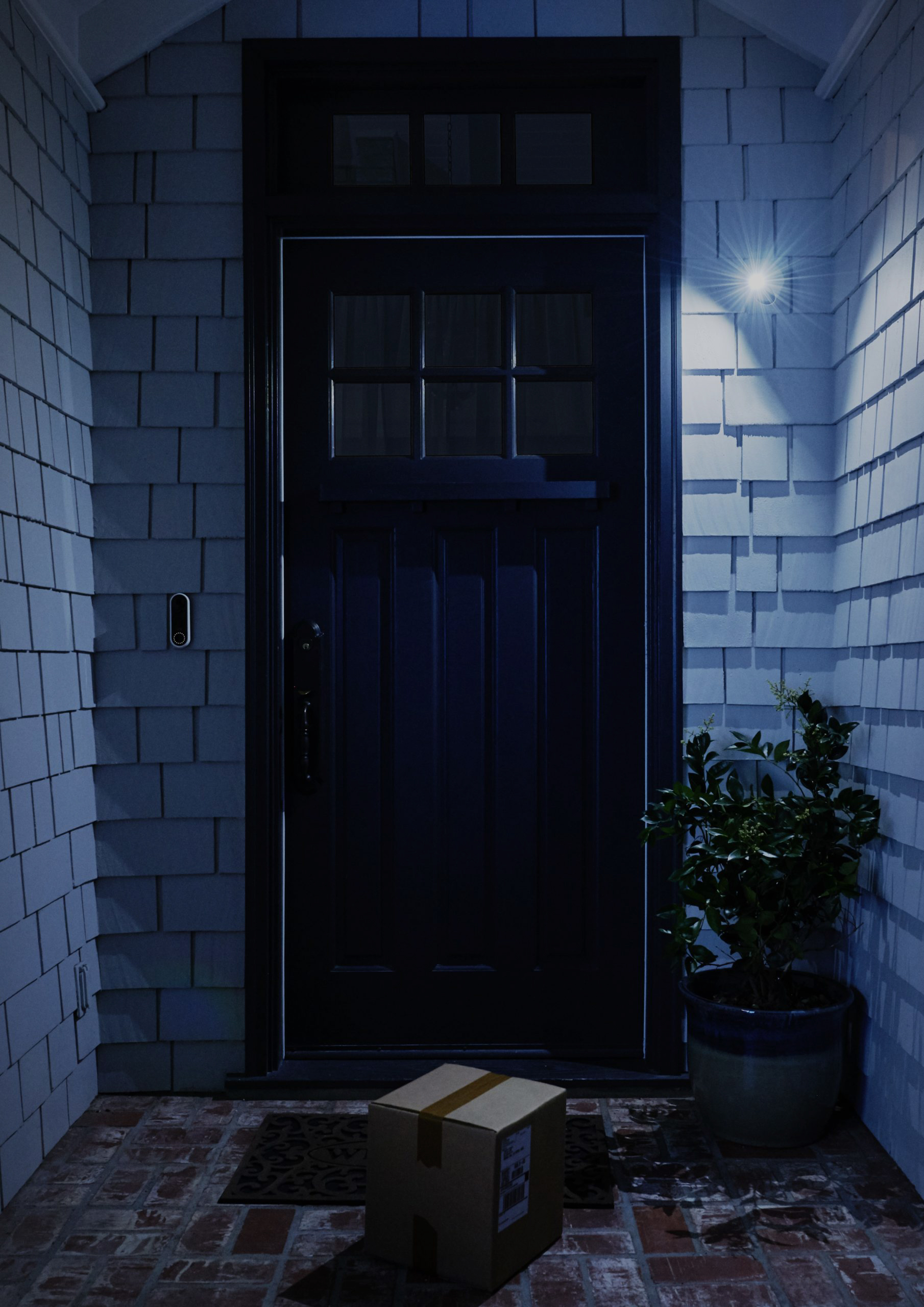
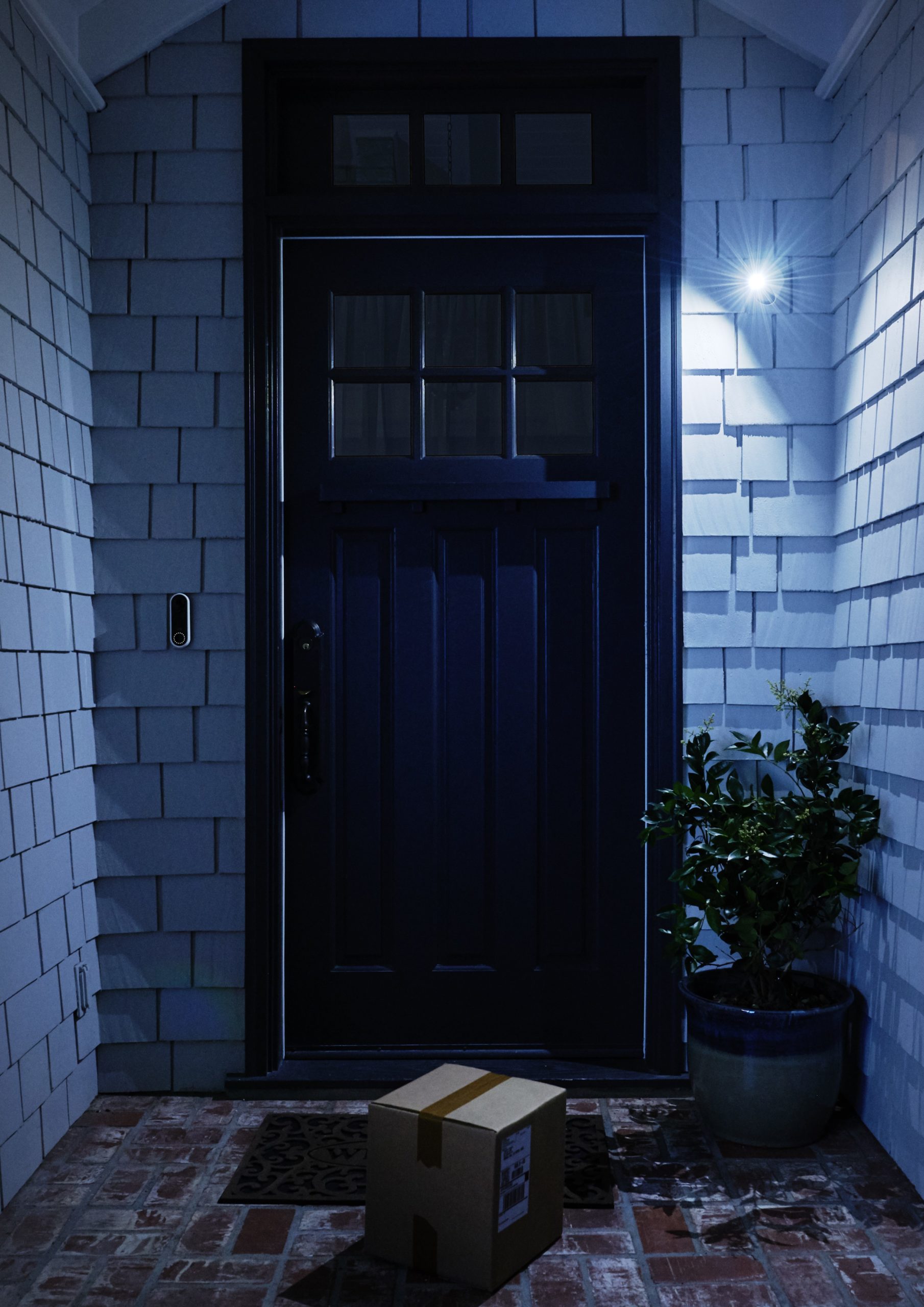
If you’re shopping for a spotlight camera, a more modest lumen count may be perfectly fine. But if you’re in the market for a floodlight with a good field of view, look for something with a higher lumen count to make up for the larger surface it has to cover. (The Arlo Wireless Floodlight is capable of a whopping 3,000 lumens, plenty for a 160° Field of View).
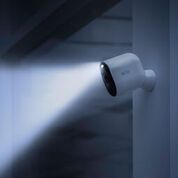
Concentrated spotlight on an Arlo Pro camera feels brighter when covering a small area.
If you’re shopping for a spotlight camera, a more modest lumen count may be perfectly fine. But if you’re in the market for a floodlight with a good field of view, look for something with a higher lumen count to make up for the larger surface it has to cover. (The Arlo Wireless Floodlight is capable of a whopping 3,000 lumens, plenty for a 160° Field of View).
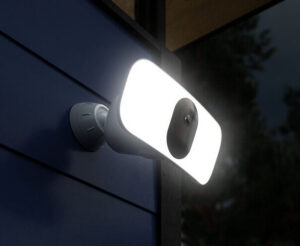
Arlo Wireless Floodlight is capable of up to 3,000 lumens
Light temperature (measured in Kelvins)
White light feels brighter because it scatters faster and warm light feels softer because it scatters more gradually (think “golden hour” colors). For security devices, a white, cooler light provides better contrast. That means details like shirt colors and license plate numbers will be easy to see.
Your fixture’s design and color
Darker shades will dim light and allow fewer lumens to escape. Which may be just the thing you want for a soft, cozy, glow. For outdoor and work lights, keeping the LED bulb uncovered gives you the maximum light output.
How to use lumens to shop for lighting and light bulbs
You’re likely not the only one asking “what are lumens?” If you grew up shopping for light bulbs in watts, the term may be pretty meaningless.
The short answer is that watts measure how much energy a light bulb uses. In the past, incandescent bulbs were common. They burn a great deal of energy, so being conscious of whether or not a bulb is 60 watts or 100 was important.
Now, LED bulbs are pretty universal and burn so little energy that the most sensible way to shop for lights is now by their light output. Here’s how to figure out how many lumens in LED bulbs you need based on your use case:
Nightstands and decorative lighting:
For the softest light, stay under 400 lumens. If you plan to use the lamp for reading you may want around 450 to 500 lms.
Standard living room/indoor area lighting:
500 to 850 lumens
Worklights, floodlights, and camera spotlights:
At least 1,000 lumens
Choosing floodlight and spotlight cameras using lumens
Lumen count matters when you’re trying to get a clear picture of small details, like someone’s shirt color, license plate number on a vehicle, or any objects they might be carrying.
Many floodlight cameras, including Arlo’s Wireless Floodlight, also use their own light to activate Color Night Vision, which means a brighter light will result in more vibrant camera footage.
Frequently asked questions
How many watts is 1,000 lumens?
Watts measure energy consumption, so the conversion depends on the type of light bulb you’re purchasing. A typical 1,000-lm LED bulb may consume only 10 watts, while an incandescent bulb with 1,000 lms will consume ~75W.
How many lumens do I need for security devices?
You’d need between 1,500-3,000 lumens. Arlo Floodlight is 2,000 lumens (and goes up to 3,000 with an outdoor charging cable).
What is the beam angle?
The beam angle tells you how much surface area a light can cover. The wider the beam angle the more diffused the light will be, a concentrated light with a smaller beam angle may have the same lumen count but feel brighter.
What color temperature do I need for floodlights?
Colder, white light (about 5,000K) provides higher contrast and is better for capturing details, like a logo on someone’s shirt. Save the warmer tones for decorative lights and indoor spaces, because they can make colors blended.
Do lumens correlate with brightness?
Yes, but not in a one-to-one comparison. Lumens tell you how much light output a fixture can produce. It’s a fixed number determined by a manufacturer and limited by components inside your device.
Brightness is more subjective and dependent on conditions in your environment, as well as your own vision. A concentrated light in a small space (like a reading light above a plane seat) can feel bright but be dim when placed on a ceiling of a large room. White light also “feels” more bright to our eyes than yellow light, even if the bulbs have the same lumen count.